
Custom Lapel Pin Pricing Guide: Costs, Factors & Money-Saving Tips
Whether you're ordering custom lapel pins for a corporate event, employee recognition program, sports club, charity fundraiser, military unit, or retail brand, one of the first questions you'll ask is, "How much do custom lapel pins cost?" The answer isn't as straightforward as quoting a fixed price. The custom lapel pin pricing, including cost factors, price comparisons, hidden fees, and expert tips to maximize value while staying within your budget. A simple 1-inch soft enamel pin ordered in bulk may cost less than one dollar per piece, while a premium hard enamel pin with glitter, dual plating, and custom packaging can cost several times more.
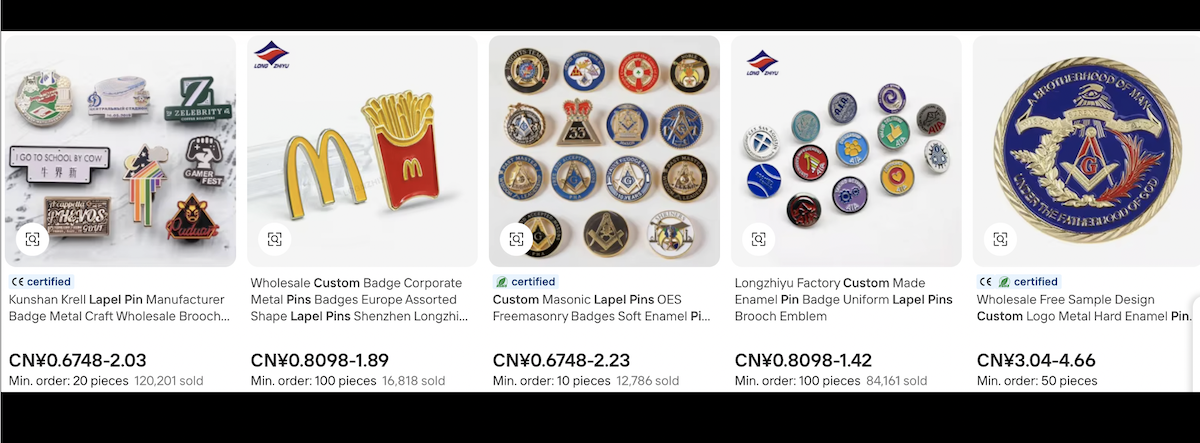
Understanding what drives these price differences is essential if you want to stay within budget while still receiving high-quality pins that represent your brand professionally.
This guide breaks down every major factor affecting custom lapel pin pricing, explains where your money goes during production, reveals hidden costs that many first-time buyers overlook, and shares practical strategies to reduce expenses without sacrificing quality. By the end of this article, you'll know exactly how manufacturers calculate prices and how to make smarter purchasing decisions for your next custom lapel pin project.
What Is the Average Cost of Custom Lapel Pins?
Although every project is unique, the following table provides a general idea of current market pricing for standard soft enamel lapel pins.
|
Quantity |
Approximate Price Per Pin |
|
50 |
$2.50–$4.50 |
|
100 |
$1.60–$3.20 |
|
300 |
$1.10–$2.20 |
|
500 |
$0.85–$1.80 |
|
1,000 |
$0.65–$1.40 |
|
5,000+ |
$0.40–$1.00 |
Prices are estimates for standard 1-inch soft enamel pins and may vary depending on design complexity, materials, finishes, and shipping.
One of the biggest surprises for first-time buyers is that ordering twice as many pins doesn't double the total cost. In fact, increasing your order quantity often lowers the price per pin significantly because many production costs are fixed regardless of volume.
Why Do Custom Lapel Pin Prices Vary So Much?
It's common for buyers to receive quotations from different suppliers that differ by 30% to 100%, even when requesting what appears to be the same product.
This doesn't necessarily mean one supplier is overcharging. Instead, manufacturers may be making different assumptions about materials, plating quality, production methods, quality control standards, packaging, or shipping services.
A lower quote may exclude mold fees or use thinner metal. A higher quote may include premium finishes, stricter inspection processes, and faster production.
Rather than focusing only on the final number, it's important to understand what is included in the quotation.
10 Factors That Affect Custom Lapel Pin Pricing
Every custom lapel pin is unique, and each design decision influences the final manufacturing cost.
1. Pin Size
Size is one of the most significant pricing factors.
Larger pins require:
- More metal
- Larger molds
- More enamel
- Longer polishing time
- Additional electroplating
Typical size categories include:
|
Size |
Common Applications |
|
0.75" |
Employee recognition |
|
1" |
Promotional giveaways |
|
1.25" |
Corporate branding |
|
1.5" |
Collectible pins |
|
2"+ |
Limited editions and retail merchandise |
Even increasing the size by just 0.25 inches can noticeably affect production costs.
2. Material Selection
Different metals offer different balances between durability, appearance, and cost.
Iron
Iron is one of the most economical materials and is widely used for promotional pins.
Advantages:
- Affordable
- Durable
- Excellent for soft enamel
Zinc Alloy
Zinc alloy is ideal for complex shapes and three-dimensional designs because it can be cast into intricate forms.
Advantages:
- Suitable for cut-outs
- Perfect for 3D pins
- Excellent dimensional accuracy
Brass
Brass provides a premium appearance with excellent detail reproduction.
Advantages:
- Smooth finish
- High perceived value
- Ideal for executive gifts
Copper
Copper is softer than iron, allowing for exceptionally crisp stamped details.
Advantages:
- Premium quality
- Excellent polishing
- Rich plating finishes
Stainless Steel
Used less frequently but offers outstanding corrosion resistance and strength for specialty applications.
3. Manufacturing Method
The production process significantly impacts pricing.
Soft Enamel
Soft enamel remains the most popular option because it offers vibrant colors and excellent value.
Best for:
- Promotional events
- Schools
- Sports teams
- Clubs
- Corporate giveaways
Hard Enamel
Hard enamel pins undergo additional polishing until the enamel and metal sit flush.
Benefits include:
- Jewelry-like appearance
- Scratch resistance
- Long-lasting finish
The extra polishing process increases production costs.
Die Struck Pins
These pins contain no enamel and rely on polished and recessed metal surfaces to create elegant designs.
Often selected for:
- Military organizations
- Government agencies
- Executive recognition
Printed Pins
Printed pins are recommended for highly detailed artwork, gradients, and photographs that cannot be reproduced with traditional enamel.
4. Metal Plating
Plating enhances both appearance and durability.
Popular finishes include:
- Gold
- Silver
- Nickel
- Black nickel
- Antique gold
- Antique silver
- Antique copper
- Matte black
- Dual plating
Some specialty finishes require additional processing, increasing costs.
5. Number of Enamel Colors
Unlike printing, enamel colors are filled individually.
Simple designs using two or three colors typically cost less than artwork requiring ten or more precisely separated colors.
Fortunately, most manufacturers don't charge per color unless exceptionally complex filling is required.
6. Design Complexity
Intricate artwork takes longer to manufacture.
Factors that increase complexity include:
- Thin metal lines
- Tiny text
- Multiple cut-outs
- Raised and recessed details
- Layered structures
- Three-dimensional sculpting
Complex designs often require additional engineering before production begins.
7. Attachment Style
The backing may seem like a small detail, but it affects pricing.
Common options include:
- Butterfly clutch
- Rubber clutch
- Deluxe locking clutch
- Magnetic backing
- Safety pin
- Tie tack
- Screw post
Magnetic and locking mechanisms generally cost more than standard butterfly clutches.
8. Special Features
Decorative enhancements can transform a standard pin into a premium collectible.
Popular upgrades include:
- Glitter enamel
- Glow-in-the-dark enamel
- Transparent enamel
- Pearl enamel
- Rhinestones
- Dangling attachments
- Spinner mechanisms
- Sliding components
- Bottle opener functions
These additions require extra materials and assembly time.
9. Packaging
Packaging is often overlooked during budgeting.
Options range from:
- Individual poly bags
- Velvet pouches
- PVC boxes
- Paper backing cards
- Gift boxes
- Custom printed retail packaging
Retail-ready packaging can substantially increase the total project cost but also enhances perceived value.
10. Order Quantity
Order quantity has perhaps the greatest influence on unit pricing.
Many production expenses—such as artwork preparation, mold creation, machine setup, and quality inspections—remain nearly constant regardless of whether you produce 100 or 1,000 pins.
As a result, these fixed costs are spread across more units in larger orders, significantly reducing the price per pin.
Where Does Your Money Go? Understanding the Cost Breakdown
Many buyers assume that the majority of their payment covers raw materials. In reality, manufacturing a custom lapel pin involves numerous specialized processes, each contributing to the final price.
A typical production cost may be distributed approximately as follows:
|
Production Stage |
Typical Share of Total Cost |
|
Artwork & Design Preparation |
5–10% |
|
Mold Creation |
10–20% |
|
Raw Materials |
15–25% |
|
Stamping or Casting |
10–15% |
|
Enamel Filling |
10–15% |
|
Electroplating |
8–12% |
|
Polishing & Finishing |
8–12% |
|
Assembly |
5–8% |
|
Quality Inspection |
5–8% |
|
Packaging |
3–8% |
|
Shipping & Logistics |
Varies |
One interesting insight is that labor-intensive finishing processes often contribute more to the total cost than the metal itself. A highly polished hard enamel pin with intricate detailing may require significantly more production time than a basic soft enamel design, even if both use similar amounts of metal.
This explains why two pins of the same size can have dramatically different prices.
Mold Fee Explained: Is It a One-Time Cost?
One of the most common questions first-time buyers ask is:
"Why do I have to pay a mold fee?"
The answer is simple: every custom lapel pin begins with a unique mold (also called a die or tooling). This mold is custom-made from your artwork and is used to stamp or cast your design into metal.
Creating a mold requires precision CNC machining or engraving, which involves skilled labor, specialized equipment, and high-quality steel. Because every design is different, a new mold must be produced for each unique artwork.
Is the Mold Fee Charged Every Time?
Fortunately, no.
Most reputable manufacturers keep your mold for future reorders. As long as you reorder the same design without major changes, you typically won't need to pay another mold fee.
However, you should confirm a few details before placing your order:
- How long will the manufacturer store the mold?
- Is mold storage free?
- Can the mold be reused for future orders?
- What design changes require a new mold?
- Will you receive free mold maintenance?
Asking these questions upfront can help you avoid unexpected costs later.
Why Order Quantity Has the Biggest Impact on Price
If you're trying to lower the cost per pin, increasing your order quantity is often the most effective strategy.
Why?
Many production costs remain the same regardless of whether you order 100 or 1,000 pins, including:
- Artwork preparation
- Mold production
- Machine setup
- Color matching
- Quality inspections
These fixed costs are spread across more units as your order size increases.
Example
|
Quantity |
Estimated Total Cost |
Cost Per Pin |
|
100 |
$250 |
$2.50 |
|
300 |
$510 |
$1.70 |
|
500 |
$700 |
$1.40 |
|
1,000 |
$1,100 |
$1.10 |
Notice that increasing from 100 to 300 pins doesn't triple the total cost, but it significantly reduces the unit price.
For businesses that expect to reorder the same design, purchasing a larger quantity upfront is often the most economical choice.
Soft Enamel vs. Hard Enamel: Which Offers Better Value?
Many buyers assume that hard enamel is always the better option. In reality, the best choice depends on your budget, intended use, and brand image.
|
Feature |
Soft Enamel |
Hard Enamel |
|
Surface |
Textured |
Smooth & polished |
|
Appearance |
Bright and vibrant |
Premium, jewelry-like |
|
Durability |
Excellent |
Outstanding |
|
Production Time |
Faster |
Slightly longer |
|
Cost |
Lower |
Higher |
|
Best For |
Promotions, clubs, events |
Corporate gifts, premium merchandise |
Choose Soft Enamel If:
- You need large quantities.
- You're working within a limited budget.
- You want bold, vibrant colors.
- You're producing promotional giveaways.
Choose Hard Enamel If:
- You want a premium finish.
- The pins represent a luxury brand.
- They're intended as executive gifts or collectibles.
- Long-term durability is a priority.
Neither option is universally "better." The right choice depends on your goals and budget.
Hidden Costs Buyers Often Overlook
Many online quotations focus only on the price per pin, but several additional expenses can affect your final budget.
Rush Production
Standard production usually takes 10–20 business days. Expedited manufacturing often incurs additional charges because it requires priority scheduling and overtime labor.
Express Shipping
Air freight is significantly more expensive than sea shipping but is often necessary for urgent orders.
Custom Packaging
Premium gift boxes, printed backing cards, or retail-ready packaging can add noticeable costs to your order.
Special Color Matching
If your brand requires exact Pantone color matching, additional setup may be necessary to ensure color consistency.
Import Duties and Taxes
International buyers should also account for customs duties, VAT, GST, or other local taxes, depending on their country's import regulations.
Understanding these potential costs helps you compare quotations more accurately and avoid surprises.
How Special Features Affect Pricing
Adding premium features can make your lapel pins more eye-catching and collectible, but each enhancement increases manufacturing complexity.
|
Feature |
Cost Impact |
Popular Applications |
|
Glitter Enamel |
Low |
Promotional events |
|
Glow-in-the-Dark |
Medium |
Safety campaigns |
|
Transparent Enamel |
Medium |
Artistic designs |
|
Pearl Enamel |
Medium |
Luxury branding |
|
Rhinestones |
Medium–High |
Fashion accessories |
|
Dangling Parts |
Medium |
Souvenir pins |
|
Spinner Elements |
High |
Collector editions |
|
Sliding Components |
High |
Interactive designs |
|
Cut-Out Areas |
Medium |
Modern logos |
|
3D Relief |
High |
Military & commemorative pins |
Before selecting multiple upgrades, consider whether they enhance your design or simply increase the cost. In many cases, a clean, well-designed pin without excessive embellishments creates a stronger visual impact.
Real Pricing Examples
The following examples illustrate how different specifications affect pricing.
Example 1: Promotional Event Pin
- Soft enamel
- Iron
- 1 inch
- Gold plating
- Butterfly clutch
- 500 pieces
Estimated Price: Approximately $1.10–$1.60 per pin
Ideal for trade shows, schools, and marketing campaigns.
Example 2: Corporate Recognition Pin
- Hard enamel
- Brass
- 1.25 inches
- Nickel plating
- Deluxe clutch
- 300 pieces
Estimated Price: Approximately $2.20–$3.20 per pin
A premium option for employee recognition or executive gifts.
How to Reduce Custom Lapel Pin Costs Without Sacrificing Quality
Lowering your budget doesn't mean compromising on quality. Experienced buyers often use these strategies to maximize value:
Order Larger Quantities
As discussed earlier, increasing your order size is the fastest way to reduce the unit price.
Keep the Design Simple
Intricate details, multiple cut-outs, and moving parts require more manufacturing time. A clean design is often both more affordable and more visually effective.
Choose Standard Sizes
Pins measuring 1 to 1.25 inches are typically the most cost-efficient because they use standard production processes.
Limit Premium Features
Only add enhancements such as glitter, rhinestones, or spinner mechanisms when they genuinely improve the design.
Reuse Existing Molds
If you plan to reorder, keep the same design whenever possible to avoid paying another mold fee.
Plan Ahead
Avoid rush production by ordering well in advance of your event. This can save both manufacturing and shipping costs.
Work with an Experienced Manufacturer
An experienced supplier can often recommend design adjustments that reduce production costs while maintaining the overall appearance of your pin.
Should You Choose the Cheapest Supplier?
It's tempting to select the lowest quotation, but price alone shouldn't determine your decision.
A reliable manufacturer offers more than competitive pricing. They also provide:
- Consistent product quality
- Accurate color matching
- Durable plating
- Responsive customer service
- Reliable production schedules
- Thorough quality inspections
- Transparent pricing
- Clear communication throughout the project
A slightly higher initial investment may save you from costly delays, defects, or disappointing results.
Instead of asking, "Who offers the cheapest lapel pins?", ask, "Which supplier provides the best overall value?"
A Simple Custom Lapel Pin Price Formula
While every project is unique, you can estimate your budget using this straightforward formula:
Total Project Cost = Mold Fee + (Unit Price × Quantity) + Shipping + Optional Features + Taxes (if applicable)
For example:
- Mold Fee: $60
- 500 Pins × $1.25 = $625
- Shipping: $85
- Glitter Upgrade: $40
Estimated Total: $810
This simple calculation helps you plan your budget before requesting formal quotations.
Frequently Asked Questions
How much do custom lapel pins cost?
Most standard soft enamel lapel pins range from $0.40 to $4.50 per piece, depending on size, quantity, materials, and customization options.
What is the minimum order quantity?
Many manufacturers accept orders starting at 50 or 100 pieces, although larger quantities typically offer better value.
Are mold fees refundable?
Generally, mold fees are non-refundable because they cover the cost of creating custom tooling for your design.
Can I reorder without paying another mold fee?
Yes. If the manufacturer still has your mold and your design hasn't changed, you can usually reorder without paying another tooling fee.
Which type of lapel pin is the most affordable?
Soft enamel pins made from iron are often the most economical choice for promotional use.
Does a larger pin always cost more?
Yes. Larger pins require more materials and longer production times, which generally increases the overall cost.
How long does production take?
Standard production typically takes 10–20 business days, depending on the complexity and quantity of your order.
What file format should I provide?
Vector files such as AI, EPS, or PDF are preferred because they ensure accurate mold production.
Can I order multiple designs in one production run?
Many manufacturers can accommodate multiple designs, although pricing depends on the quantity and complexity of each design.
How can I get the best price?
Order larger quantities, keep your design simple, avoid unnecessary premium features, and work with an experienced manufacturer.
Final Thoughts
Custom lapel pin pricing is influenced by far more than size or quantity. Material selection, manufacturing method, plating, design complexity, special features, packaging, and production volume all play important roles in determining the final cost.
Rather than focusing solely on finding the lowest price, consider the overall value your supplier provides. A well-made lapel pin reflects your brand, commemorates meaningful achievements, and creates lasting impressions—making quality and reliability just as important as affordability.
By understanding how pricing works and planning your project strategically, you can confidently choose the right specifications, control your budget, and create custom lapel pins that deliver exceptional value for years to come.
Looking for custom lapel pin manufacturers? Contact Morning Craft today, to get a free quote now!



.png)
.png)
.png)
.png)