
Challenge Coin Design Guide: How to Create Custom Coins | Morning Craft
Challenge coins are more than small metal discs — they are powerful symbols of identity, achievement, and belonging. Whether you're a military commander recognizing your unit's bravery, a corporate leader celebrating employee milestones, or a nonprofit organization building community, A Challenge Coin Design Guide is a step-by-step resource that teaches you how to plan, create, and produce custom challenge coins — covering everything from defining your coin's purpose, choosing shapes and sizes, selecting materials and finishes, to avoiding common design mistakes and understanding the manufacturing process.
Why challenge coin design is more than just adding a logo
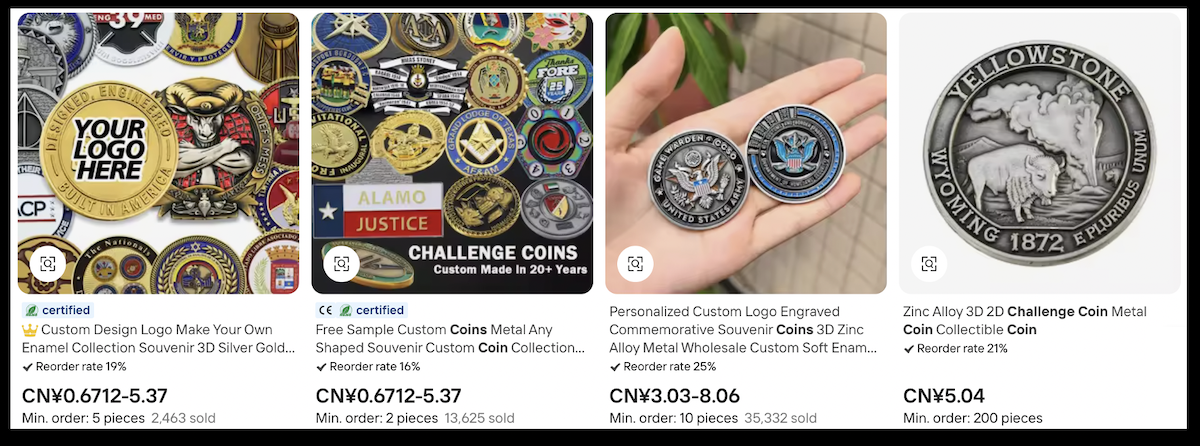
Many first-time buyers make the mistake of thinking challenge coin design is simply about placing a logo on a round piece of metal. In reality, effective challenge coin design is a strategic process that combines art, symbolism, manufacturing knowledge, and storytelling. A well-designed custom coin becomes a conversation starter, a source of pride, and a lasting reminder of a meaningful moment.
How great design increases perceived value
The difference between a 3coinanda 30 coin often isn't the material — it's the design. Coins with thoughtful composition, meaningful symbolism, and premium finishing techniques carry significantly higher perceived value. Recipients can instantly tell when a coin was designed with care versus thrown together at the last minute.
The relationship between design, manufacturing, and storytelling
At Morning Craft, we've spent over a decade helping organizations bring their vision to life. One of the most important lessons we've learned is this: great design must work hand-in-hand with manufacturing capabilities. A beautiful concept that can't be produced effectively will disappoint. That's why this guide covers not just design aesthetics, but also the practical manufacturing considerations that bring your vision to reality.
What readers will learn from this guide
In this comprehensive guide, you'll learn:
- The core principles behind exceptional challenge coin design
- A step-by-step process from concept to finished product
- How to choose shapes, sizes, materials, and finishes
- Industry-specific design strategies
- Common mistakes to avoid
- How to work with manufacturers to get the best results
What Makes a Great Challenge Coin Design
The Three Principles of Exceptional Challenge Coin Design
Every memorable challenge coin shares three fundamental qualities:
Simplicity
The best challenge coins communicate their message in under three seconds. Overcrowded designs confuse the viewer and dilute the impact. Focus on one central image, a clear message, and supporting elements that enhance rather than compete.
Think of it this way: if someone glances at your coin across a table, can they immediately understand what it represents? If not, simplify.
Symbolism
Every element on your coin should carry meaning. The eagle represents freedom and strength. The shield represents protection. The star represents excellence. When every symbol is intentional, the coin becomes a narrative object rather than just a decorative one.
Memorability
A great challenge coin design sticks in the mind. This comes from a combination of unique composition, emotional resonance, and distinctive visual elements. The most memorable coins often feature one unexpected detail — a hidden image, a unique shape, or a clever use of negative space.
Why Some Challenge Coins Become Collectibles
Not all challenge coins are created equal. Some become highly sought-after collectibles that people trade, display, and cherish for decades. Here's why:
- Emotional connection Coins that mark significant life events — deployments, retirements, promotions, memorials — carry emotional weight that transcends the physical object.
- Storytelling Coins that tell a story through their imagery create a deeper bond with the recipient. When someone can look at a coin and recall a specific moment, the coin becomes irreplaceable.
- Limited editions Scarcity drives desire. Numbered coins, anniversary editions, and short production runs create urgency and collectibility.
- Unique craftsmanship Coins featuring premium techniques — ultra high relief, dual plating, cut-out windows, or glow-in-the-dark enamel — stand out in any collection and demonstrate the maker's commitment to quality.
Common Purposes of Challenge Coins
Understanding the purpose of your coin is the foundation of good design. Here are the most common applications:
|
Purpose |
Key Design Consideration |
|
Military |
Unit insignia, mission symbols, rank indicators |
|
Police & Fire Departments |
Badge elements, department seals, service symbols |
|
Government |
Official seals, flags, institutional imagery |
|
Corporate Recognition |
Company logo, achievement milestones, values |
|
Employee Awards |
Performance symbols, year markers, personalization |
|
Sports Teams |
Team mascot, championship year, player number |
|
Universities |
School crest, founding year, mascot |
|
Clubs |
Membership symbols, founding date, motto |
|
Fundraising |
Cause imagery, call to action, donation tier |
|
Commemorative Events |
Event date, location, participating organizations |
Step 1: Define the Purpose Before Designing
Questions to Answer Before Creating Artwork
Before you open any design software or contact a manufacturer, answer these four critical questions:
Who will receive the coin?
The recipient determines everything. A four-star general expects different quality and symbolism than a new recruit. A CEO receiving a corporate recognition coin has different expectations than a customer receiving a promotional piece.
Why is it being made?
Is it to recognize achievement? Build team cohesion? Commemorate an event? Promote a brand? The "why" shapes every design decision from imagery to messaging.
Will it be carried daily or displayed?
Coins meant for daily carry need durable finishes and comfortable edges. Display coins can feature more delicate details and premium packaging.
Is it for recognition or branding?
Recognition coins focus on the recipient's achievement. Branding coins focus on the organization's identity. These require fundamentally different design approaches.
How Purpose Influences Every Design Decision
Let's compare how purpose changes design:
Military Coin
- Purpose: Unit identity and morale
- Design: Unit crest, motto, mission-specific imagery
- Finish: Antique gold or silver for tradition
- Shape: Traditional round or unit-specific custom shape
- Tone: Serious, proud, historic
Corporate Coin
- Purpose: Employee recognition or brand awareness
- Design: Company logo, achievement symbol, clean modern aesthetic
- Finish: Polished gold or dual-tone for premium feel
- Shape: Round or logo-shaped
- Tone: Professional, celebratory, aspirational
Anniversary Coin
- Purpose: Commemorate a milestone
- Design: Founding date, "years of service" text, evolution imagery
- Finish: Premium plating with special edition marking
- Shape: Round with commemorative edge text
- Tone: Reflective, proud, forward-looking
Promotional Coin
- Purpose: Brand awareness and marketing
- Design: Bold logo, tagline, website or QR code
- Finish: Eye-catching colors, possibly soft enamel
- Shape: Logo shape for maximum brand recognition
- Tone: Fun, memorable, shareable
Step 2: Build a Design Concept That Tells a Story
Every Great Challenge Coin Has a Central Theme
Before adding any design elements, define your coin's central theme in one sentence. Examples:
- "This coin honors 20 years of service to our community."
- "This coin represents the bond between our deployed unit and the families who supported us."
- "This coin celebrates our team's record-breaking achievement."
Every design element should support this central theme. If an element doesn't contribute to the story, remove it.
Creating Visual Hierarchy
Effective challenge coin design follows a clear visual hierarchy:
Primary element → The dominant focal point (unit crest, logo, central image)
Secondary element → Supporting imagery that adds context (motto banner, date, secondary symbols)
Supporting details → Small elements that add depth (stars, laurel wreaths, decorative borders)
Background texture → Subtle patterns that fill empty space without competing (guilloche patterns, radial lines, subtle textures)
This hierarchy ensures the viewer's eye moves through the design naturally, absorbing the most important information first.
Choosing the Right Symbols
Symbols are the language of challenge coins. Here's a guide to common symbols and their meanings:
|
Symbol |
Represents |
Best For |
|
Eagles |
Freedom, strength, vigilance |
Military, government, law enforcement |
|
Shields |
Protection, defense, security |
Police, fire, security firms |
|
Flags |
Patriotism, national identity |
Military, government, veterans |
|
Buildings |
Institution, heritage, place |
Universities, corporations, cities |
|
Mascots |
Team spirit, identity |
Sports teams, schools, clubs |
|
Vehicles |
Mission, capability |
Military units, transportation companies |
|
Company Products |
Innovation, achievement |
Corporate, manufacturing |
|
Maps |
Location, deployment, territory |
Military, exploration, travel |
|
Family Crests |
Heritage, legacy, tradition |
Family businesses, heritage organizations |
Incorporating Company Branding Without Looking Like Advertising
One of the most common design challenges is incorporating corporate branding without making the coin feel like a cheap promotional item. Here's how:
- Use your logo as a design element, not the entire design. Integrate it into a larger composition.
- Focus on values, not products. Instead of showing your product, show what your company stands for.
- Use brand colors strategically. Your brand palette can guide your enamel colors without dominating the design.
- Add a personal element. Include the recipient's name, department, or achievement to make it feel like recognition rather than advertising.
Step 3: Choosing the Best Challenge Coin Shape
Traditional Round Coins
Advantages:
- Most cost-effective to produce
- Classic, timeless appearance
- Easy to hold and carry
- Works with all edge options
- Familiar and expected in military/government contexts
Applications:
- Military unit coins
- Government agency coins
- Traditional commemorative coins
- Budget-conscious projects
Custom Shapes
Custom-shaped coins immediately stand out and create stronger visual impact:
|
Shape |
Best For |
|
Shield |
Police, security, protection-themed organizations |
|
Badge |
Law enforcement, first responders |
|
Dog Tag |
Military, veterans, memorial coins |
|
Helmet |
Fire departments, construction, sports |
|
Aircraft |
Air force units, aviation companies |
|
Vehicle |
Transportation, automotive, military vehicle units |
|
State Outline |
State agencies, tourism, regional organizations |
|
Logo Shape |
Corporate branding, promotional coins |
When Custom Shapes Increase Cost
Custom shapes require additional tooling and may increase per-unit costs. Consider these factors:
Design considerations:
- Complex outlines with many points increase mold complexity
- Very thin protruding elements may be fragile
- Interior cut-outs add manufacturing steps
Manufacturing limitations:
- Extremely detailed edges may not cast cleanly
- Very small custom shapes (under 1.5") may lose shape definition
- Sharp interior angles can create weak points
At Morning Craft, we provide free design consultations to help you determine whether a custom shape is feasible and cost-effective for your project.
Step 4: Selecting the Right Coin Size
Standard Sizes Explained
|
Size |
Diameter |
Best For |
|
1.5" |
38mm |
Small promotional coins, budget projects, keychain coins |
|
1.75" |
44mm |
Standard corporate coins, employee recognition |
|
2" |
51mm |
Most popular size; military, police, general purpose |
|
2.25" |
57mm |
Detailed designs, commemorative coins |
|
2.5" |
64mm |
Premium display coins, complex artwork |
|
3" |
76mm |
Large commemorative pieces, desk display coins |
How Size Affects Your Design
- Detail Larger coins allow for more intricate details, smaller text, and complex compositions. Smaller coins require simplified designs with bold elements.
- Weight A 2" coin in zinc alloy weighs approximately 35-45g. A 2.5" coin can weigh 60-80g. Consider whether the recipient will carry the coin daily — heavier coins may be impractical for pocket carry.
- Cost Larger coins require more material and larger molds, increasing per-unit cost. The cost increase is roughly proportional to the area increase.
- Premium appearance Larger coins generally feel more substantial and premium. However, a well-designed 1.75" coin can feel more premium than a poorly designed 2.5" coin.
Recommended Sizes for Different Industries
|
Industry |
Recommended Size |
Reason |
|
Military |
1.75" – 2" |
Traditional, pocket-friendly |
|
Police/Fire |
2" – 2.25" |
Room for badge details |
|
Corporate |
1.75" – 2" |
Professional, not oversized |
|
Sports |
2" – 2.5" |
Bold graphics need space |
|
Universities |
2" – 2.25" |
Detailed crests need room |
|
Promotional |
1.5" – 1.75" |
Cost-effective, easy to distribute |
|
Commemorative |
2.25" – 3" |
Display-worthy, detailed |
Step 5: Front and Back Design Strategy
What Should Go on the Front?
The front (obverse) of your challenge coin is the primary face — the first thing people see. It should feature:
- Your primary symbol or logo
- The most important text (organization name, unit designation)
- The central thematic image
- Any dates or milestone numbers
Think of the front as your coin's "headline."
What Works Better on the Back?
The back (reverse) is perfect for:
- Mottos or slogans
- Secondary imagery
- Personalization (recipient name, serial number)
- Additional context (event details, mission name)
- QR codes or website URLs (for promotional coins)
- "Presented by" text
Using Both Sides to Tell One Story
The most powerful challenge coins use both sides as chapters in a single narrative.
Example 1: Military Deployment Coin
- Front: Unit crest with deployment location map
- Back: Unit motto, deployment dates, and "In Honor of Those Who Served"
Example 2: Corporate Anniversary Coin
- Front: Company logo with "25 Years of Excellence"
- Back: Timeline of company milestones and founder's quote
Example 3: Memorial Coin
- Front: Portrait or symbolic representation of the honoree
- Back: Dates of service, meaningful quote, and "Never Forgotten"
Step 6: Designing Artwork That Manufactures Well
Why Vector Artwork Matters
Challenge coin manufacturing requires vector artwork. Unlike raster images (JPEGs, PNGs), vector files use mathematical paths that can be scaled infinitely without quality loss. This is essential for creating clean, precise molds.
Accepted vector formats:
- AI (Adobe Illustrator) — Preferred
- EPS (Encapsulated PostScript) — Widely compatible
- SVG (Scalable Vector Graphics) — Good for simple designs
- PDF (Vector-based) — Acceptable if created from vector software
If you only have raster artwork, our design team at Morning Craft can help recreate your design in vector format.
Minimum Line Width
For clean production, all lines should be at least 0.2mm (0.008") wide. Lines thinner than this may not cast properly or may break during the plating process.
Minimum Text Size
Text on challenge coins should be no smaller than 4pt (approximately 1.4mm cap height). Anything smaller becomes illegible after the casting and plating process.
Avoiding Design Details That Can't Be Produced
Even with advanced manufacturing, some design elements simply don't translate well to metal:
|
Problem |
Why It Fails |
Solution |
|
Tiny letters |
Below minimum size, illegible |
Increase size or reduce text |
|
Thin lines |
Break during casting or plating |
Thicken to minimum 0.2mm |
|
Overcrowded elements |
Details merge together |
Simplify or increase coin size |
|
Negative spaces |
Small gaps fill with plating |
Widen gaps or use color instead |
|
Manufacturing tolerances |
Metal casting has ±0.1mm tolerance |
Design with tolerance in mind |
Step 7: Relief Design — Flat vs 3D Challenge Coins
2D Relief
What it is: Design elements are raised at a uniform height, creating a flat, graphic appearance.
Advantages:
- Most cost-effective option
- Clean, modern look
- Excellent for detailed line work
- Works well with soft enamel coloring
- Faster production time
Applications:
- Corporate coins
- Promotional coins
- Budget-conscious projects
- Designs with lots of color
High Relief
- What it is: Design elements are raised at varying heights, creating a three-dimensional sculptural effect.
- Premium appearance: High relief coins catch light differently across their surface, creating dynamic shadows and a sense of depth that flat coins cannot achieve.
- Depth: Multiple levels of relief allow designers to create foreground, midground, and background elements, adding visual complexity.
- Lighting effects: The varied heights create natural highlights and shadows that change as the coin is tilted, making the design feel alive.
Ultra High Relief
What it is: Extreme three-dimensional sculpting with dramatic height differences between elements.
When is it worth the additional cost?
- Commemorative coins meant for display
- Limited edition collector pieces
- Coins where visual impact is the primary goal
- Premium recognition awards
- Coins representing significant milestones
Ultra high relief requires more expensive molds and longer production times, but the result is truly stunning.
Step 8: Choosing Between Soft Enamel, Hard Enamel, and Die-Struck Coins
Soft Enamel
What it is: Colored enamel is filled into recessed areas of the coin, sitting below the raised metal lines.
Advantages:
- Most affordable colored option
- Wide range of color possibilities
- Tactile texture (you can feel the raised metal lines)
- Great for detailed, multi-color designs
Disadvantages:
- Enamel can scratch over time
- Slightly less premium feel than hard enamel
- Colors may fade with extreme UV exposure
Best applications:
- Promotional coins
- Sports team coins
- Event coins
- Budget-friendly projects with color requirements
Hard Enamel
- What it is: Colored enamel is filled and then polished flush with the metal surface, creating a smooth, glass-like finish.
- Premium look: Hard enamel coins have a jewelry-like quality. The smooth surface reflects light beautifully and feels luxurious to the touch.
- Durability: Because the enamel is polished flush with the metal, it's much more resistant to scratching and wear than soft enamel.
Ideal industries:
- Military and government
- Executive corporate gifts
- Award coins
- Collectible editions
Die Struck
- What it is: No enamel coloring — the design is created purely through raised and recessed metal, often with an antique or polished finish.
- Classic military appearance: Die-struck coins have been the traditional choice for military challenge coins for decades. Their monochromatic elegance speaks to tradition and seriousness.
- Luxury aesthetic: Without color competing for attention, die-struck coins rely entirely on the quality of the sculpt and the beauty of the metal finish.
Comparison Table
|
Feature |
Soft Enamel |
Hard Enamel |
Die Struck |
|
Price |
$ |
$$ |
$$ |
|
Appearance |
Textured, colorful |
Smooth, premium |
Classic, elegant |
|
Durability |
Good |
Excellent |
Excellent |
|
Production time |
12-15 days |
15-20 days |
12-15 days |
|
Color options |
Unlimited |
Unlimited |
None (metal only) |
|
Best for |
Promotional, sports |
Military, corporate |
Traditional military |
Step 9: Metal Plating Selection
Popular Finishes
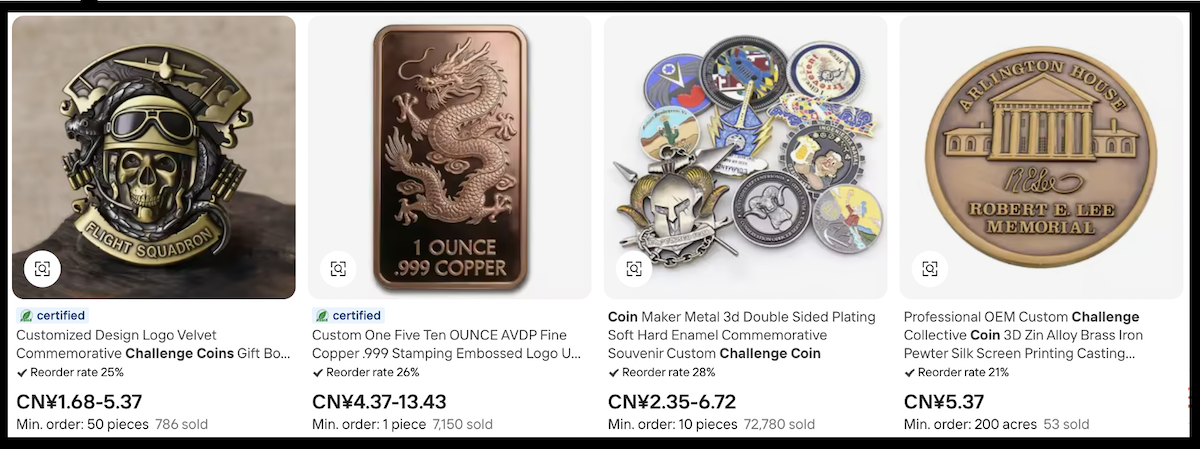
The metal plating is the "skin" of your challenge coin — it dramatically affects the coin's appearance and perceived value.
|
Finish |
Appearance |
Best For |
|
Gold |
Bright, warm, luxurious |
Awards, recognition, premium gifts |
|
Silver |
Cool, professional, modern |
Corporate, technology, clean designs |
|
Copper |
Warm, rustic, vintage |
Heritage, traditional, artistic coins |
|
Black Nickel |
Dark, dramatic, modern |
Military, tactical, edgy brands |
|
Antique Gold |
Aged, traditional, distinguished |
Military, historical, commemorative |
|
Antique Silver |
Aged, classic, sophisticated |
Government, law enforcement |
|
Antique Copper |
Warm, vintage, artisanal |
Heritage brands, artistic coins |
Dual Plating
Dual plating uses two different metal finishes on the same coin, creating striking visual contrast.
When it creates premium visual contrast:
- Gold raised elements on a silver background
- Black nickel background with gold highlights
- Copper accents on an antique silver base
Dual plating adds one additional production step but significantly elevates the coin's visual impact.
Matching Metal Finish to Brand Identity
Your metal finish should align with your organization's visual identity:
- Gold brands → Gold or antique gold plating
- Silver/tech brands → Silver or black nickel
- Heritage brands → Antique copper or antique gold
- Modern/luxury brands → Polished gold or dual plating
- Military/tactical → Antique finishes or black nickel
Step 10: Using Color Effectively
How Many Colors Are Ideal?
2-4 colors is the sweet spot for most challenge coins. This provides enough visual interest without overwhelming the design or significantly increasing cost.
- 1-2 colors: Clean, bold, graphic
- 3-4 colors: Balanced, detailed, professional
- 5-6 colors: Complex, busy, potentially cluttered
- 7+ colors: Rarely necessary, increases cost and production complexity
Pantone Color Matching
At Morning Craft, we use Pantone color matching to ensure your coin colors exactly match your brand guidelines. Simply provide your Pantone codes, and we'll match them precisely in enamel.
High Contrast Design Principles
Color contrast ensures your design is readable and visually impactful:
- Light on dark: Gold text on black nickel background
- Dark on light: Navy enamel on silver background
- Complementary colors: Blue and orange, red and green (use sparingly)
- Avoid low contrast: Similar-value colors next to each other (e.g., light blue on white)
When Less Color Creates More Luxury
Some of the most prestigious coins use minimal or no color:
- Die-struck coins with a single antique finish
- Two-tone designs using only metal plating contrast
- Monochromatic designs with subtle texture variations
Restraint in color often communicates sophistication and confidence.
Step 11: Challenge Coin Edge Options
The edge of your challenge coin is an often-overlooked design opportunity. Here are the options:
Standard Edge
A smooth, plain edge. Clean and simple. Best for coins where the face design is the star.
Rope Edge
A twisted rope pattern around the circumference. Adds a nautical or traditional feel. Popular with military and maritime organizations.
Diamond Cut
A faceted, gem-like edge that catches light beautifully. Creates a premium, jewelry-like appearance.
Cross Cut
Diagonal lines cut into the edge, creating a textured grip. Adds visual interest and a tactile element.
Oblique Edge
Angled cuts that create a dynamic, modern appearance. Popular with contemporary designs.
Custom Edge Text
Advantages:
- Adds an additional messaging surface without cluttering the face
- Perfect for mottos, dates, or serial numbers
- Creates a premium, finished feel
- Unique detail that recipients notice and appreciate
Recommended applications:
- Military unit coins (motto)
- Anniversary coins (year and milestone)
- Limited editions (serial number)
- Corporate coins (company values)
Step 12: Premium Design Features That Increase Perceived Value
These special features transform a standard challenge coin into an extraordinary one:
Cut-Out Windows
Sections of the coin are completely cut through, creating see-through areas. This adds dimensionality and allows for creative layered designs.
Spinner Coins
A central element rotates freely within the coin. Creates an interactive, fidget-friendly experience that keeps recipients engaged.
Bottle Openers
A functional bottle opener integrated into the coin's design. Perfect for sports teams, breweries, and casual corporate gifts.
Glow-in-the-Dark Enamel
Special phosphorescent enamel that absorbs light and glows in darkness. Creates a "wow" factor and is perfect for military, first responder, and novelty coins.
Transparent Enamel
Semi-transparent colored enamel that allows the metal beneath to show through, creating a stained-glass effect. Beautiful for artistic and commemorative designs.
Glitter Enamel
Enamel infused with fine glitter particles that sparkle in light. Popular for sports, celebration, and youth-oriented coins.
Sequential Numbering
Each coin in a production run is individually numbered (e.g., 001/500). Creates instant collectibility and exclusivity.
Hidden Images
Subtle images or messages hidden within the design that are only visible upon close inspection. Creates a sense of discovery and insider knowledge.
UV Printing
Invisible ink that only appears under ultraviolet light. Perfect for security features, Easter eggs, or surprise elements.
Epoxy Dome
A clear, domed epoxy coating over part or all of the coin face. Creates a glass-like, three-dimensional effect that protects the design beneath.
Moving Parts
Hinged elements, sliding components, or rotating features that add mechanical interactivity. The ultimate premium feature for collector coins.
Step 13: Typography on Challenge Coins
Choosing Readable Fonts
Not all fonts work well on challenge coins. Due to the manufacturing process,
choose fonts with:
- Bold weight — Thin fonts lose definition
- Clear letterforms — Avoid overly decorative scripts
- Adequate spacing — Letters need room to breathe
- Consistent stroke width — Uneven strokes cause casting issues
Recommended font styles:
- Sans-serif (clean, modern): Helvetica, Arial, Futura
- Serif (traditional, formal): Times New Roman, Garamond
- Slab serif (strong, military): Rockwell, Roboto Slab
- Custom lettering for unique mottos
Curved Text Best Practices
Curved text is common on challenge coins (following the circular edge). Follow these rules:
- Maintain consistent letter spacing along the curve
- Don't curve text more than 180° unless necessary
- Keep curved text at least 4pt
- Test readability at actual coin size
- Ensure letters don't touch or overlap
Font Size Guidelines
|
Element |
Minimum Size |
Recommended Size |
|
Main title |
6pt |
8-12pt |
|
Secondary text |
5pt |
6-8pt |
|
Small text/motto |
4pt |
5-6pt |
|
Edge text |
3.5pt |
4-5pt |
Common Typography Mistakes
- Using fonts thinner than 0.3mm stroke width
- Placing text too close to the coin edge
- Mixing more than 2-3 font families
- Using all caps for long passages (hard to read)
- Ignoring kerning (letter spacing) on curved text
- Placing text over busy background textures
Step 14: Challenge Coin Design Psychology
Why People Keep Some Coins Forever
The coins people treasure most share psychological triggers:
- Personal relevance — The coin represents something specific to them
- Earned, not given — Coins received through achievement feel more valuable
- Scarcity — Limited availability increases perceived worth
- Story — There's a narrative behind the coin that the owner can share
- Quality — The physical quality signals that the giver valued the recipient
Emotional Design
Design elements that trigger emotional responses:
- Warm colors (gold, copper, red) → Pride, achievement, passion
- Cool colors (silver, blue, black) → Trust, professionalism, calm
- Organic shapes → Approachability, community
- Angular shapes → Strength, precision, authority
- Symmetry → Balance, tradition, stability
- Asymmetry → Dynamism, modernity, energy
Color Psychology
|
Color |
Emotion |
Best For |
|
Red |
Courage, passion, urgency |
Military, fire departments |
|
Blue |
Trust, loyalty, calm |
Police, corporate, government |
|
Gold |
Achievement, prestige, wealth |
Awards, recognition |
|
Silver |
Modernity, precision, clarity |
Technology, corporate |
|
Green |
Growth, service, nature |
Environmental, medical |
|
Black |
Power, elegance, mystery |
Premium, tactical |
|
White |
Purity, peace, simplicity |
Memorial, humanitarian |
Symbolism
Beyond individual symbols, the combination of symbols creates meaning:
- Eagle + Shield = Protection of freedom
- Star + Laurel = Earned excellence
- Anchor + Rope = Naval tradition
- Flame + Cross = Sacrifice and service
- Globe + Wings = Global reach
Building Pride Through Design
The ultimate goal of challenge coin design is to make the recipient feel proud. Achieve this by:
- Making the design specific to their achievement or group
- Using premium materials and finishes that signal value
- Including personalization elements (name, unit, date)
- Creating a design that's beautiful enough to display
- Packaging the coin in a way that enhances the unboxing experience
Step 15: Designing for Different Industries
Military Challenge Coins
Design elements: Unit crest, motto, deployment location, rank insignia, branch symbols Style: Traditional, bold, symbolic Finish: Antique gold, antique silver, or black nickel Shape: Round (traditional) or custom unit shape Size: 1.75" – 2"
Police Coins
Design elements: Badge shape, department seal, "To Protect and Serve," star symbols Style: Authoritative, clean, professional Finish: Silver, gold, or dual-tone Shape: Shield or badge shape Size: 2" – 2.25"
Fire Department Coins
Design elements: Maltese cross, fire helmet, flames, ladder, station number Style: Bold, heroic, traditional Finish: Antique gold or copper with red enamel Shape: Maltese cross or round Size: 2" – 2.25"
Corporate Recognition Coins
Design elements: Company logo, achievement symbol, year, clean typography Style: Modern, professional, polished Finish: Gold, silver, or dual plating Shape: Round or logo shape Size: 1.75" – 2"
Sports Coins
Design elements: Team mascot, championship year, player number, sport-specific imagery Style: Energetic, bold, colorful Finish: Polished with vibrant enamel colors Shape: Round or custom (helmet, ball, etc.) Size: 2" – 2.5"
School Coins
Design elements: School crest, mascot, founding year, motto, colors Style: Traditional, proud, academic Finish: School colors in enamel with gold or silver plating Shape: Round or shield Size: 1.75" – 2"
Government Coins
Design elements: Official seal, flag, building, jurisdiction name Style: Formal, dignified, traditional Finish: Antique gold or silver Shape: Round Size: 1.75" – 2.25"
Nonprofit Coins
Design elements: Cause imagery, mission statement, impact statistics, call to action Style: Warm, inviting, purposeful Finish: Varies by cause Shape: Round or cause-related custom shape Size: 1.75" – 2"
Step 16: Designing Limited Edition Collectible Coins
Numbered Coins
Adding sequential numbering (e.g., "001 of 250") instantly creates collectibility. Numbering can be:
- Engraved on the edge
- Printed on the back
- Stamped during production
Anniversary Editions
Anniversary coins celebrate milestones and typically feature:
- The anniversary year prominently
- "Then and Now" imagery showing evolution
- Special premium finishes not used on standard coins
- Commemorative packaging
Collector Sets
Multi-coin sets tell a broader story:
- One coin per year of a series
- One coin per department or division
- One coin per rank or achievement level
- Display cases that hold the complete set
Multi-Coin Series
Series create anticipation and repeat engagement:
- Annual releases
- Themed collections (e.g., one coin per branch of service)
- Progressive designs that build on each other
- "Complete the set" motivation drives additional orders
Packaging Design
Premium packaging elevates the perceived value of your coin:
|
Packaging Type |
Best For |
|
Velvet pouch |
Budget-friendly, simple presentation |
|
Plastic capsule |
Protection, display |
|
Wooden box |
Premium gifts, executive presentations |
|
Acrylic display case |
Desk display, collector coins |
|
Custom printed box |
Branded presentation, corporate gifts |
|
Leather case |
Luxury, military tradition |
Step 17: Challenge Coin Design Mistakes to Avoid
Learn from these common errors:
|
Mistake |
Why It's a Problem |
How to Fix |
|
Too much text |
Overwhelms the design, unreadable at small sizes |
Reduce to essential words only |
|
Poor contrast |
Design elements blend together |
Use high-contrast color combinations |
|
Low-resolution artwork |
Blurry, pixelated final product |
Always use vector artwork |
|
Choosing the wrong plating |
Clashes with design or brand |
Match plating to overall aesthetic |
|
Using too many colors |
Looks chaotic, increases cost |
Limit to 3-5 colors |
|
Ignoring manufacturing limitations |
Design can't be produced as intended |
Consult manufacturer early |
|
Weak storytelling |
Coin feels generic and forgettable |
Define a clear central theme |
|
Unbalanced layouts |
Design feels lopsided or awkward |
Use visual hierarchy and symmetry |
|
Tiny logos |
Logo is unrecognizable |
Make logo a primary element |
|
Overcomplicated artwork |
Details are lost in production |
Simplify to essential elements |
Step 18: From Concept to Finished Challenge Coin
Understanding the production process helps you plan effectively:
1. Idea Development
Define your purpose, audience, and central theme. Gather reference images and inspiration.
2. Design Brief
Document your requirements: size, shape, colors, text, budget, quantity, and deadline.
3. Digital Artwork
Create or commission vector artwork following the guidelines in this guide. Submit to your manufacturer for review.
4. Factory Proof
Your manufacturer creates a digital proof showing exactly how the coin will look. Review carefully for errors.
5. Design Revisions
Request any changes needed. Most manufacturers (including Morning Craft) offer free revisions at this stage.
6. Mold Production
Once the design is approved, a steel mold is CNC-machined from your artwork. This takes 5-7 days.
7. Mass Production
Coins are die-cast, trimmed, polished, plated, colored, and finished. Production typically takes 10-15 days.
8. Quality Inspection
Every coin is inspected for defects before packaging and shipping.
Total timeline: 15-25 days from approved artwork to delivery (depending on complexity and shipping method).
Step 19: How Good Design Reduces Manufacturing Costs
Counterintuitively, better design can actually save you money:
- Simpler designs require less mold machining time
- Fewer colors reduce enamel filling labor
- Standard shapes avoid custom tooling fees
- Appropriate sizing avoids unnecessary material costs
- Clear artwork reduces revision cycles and delays
- Manufacturing-aware design avoids costly rework
The most expensive coin isn't the one with the most features — it's the one that requires multiple revisions because the design wasn't production-ready from the start.
Final Thoughts: Your Challenge Coin Deserves Great Design
A challenge coin is a small object with a big job. It must represent your organization, honor your people, and create a lasting emotional connection — all within a space no larger than your palm.
By following the steps in this guide, you'll create a challenge coin that people don't just receive — they treasure.
Ready to start your challenge coin project?
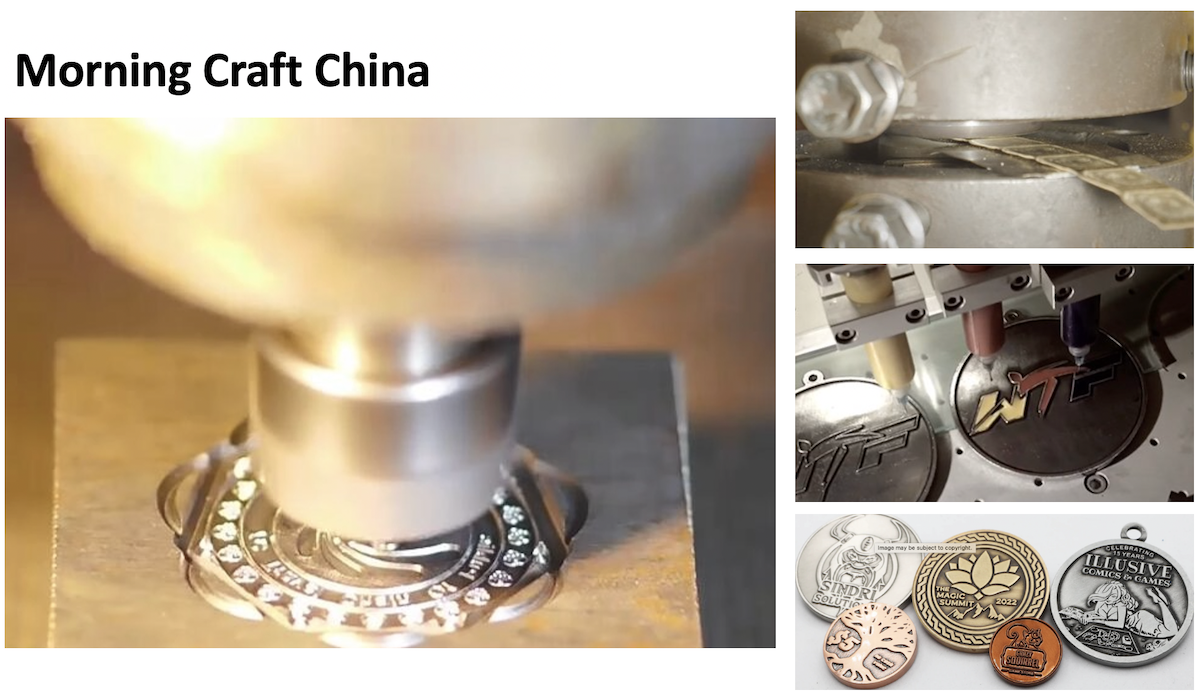
At Morning Craft, we've helped thousands of organizations design and produce custom challenge coins that exceed expectations. Our team provides:
- Free design consultations
- Free digital proofs
- No minimum order requirements
- Fast turnaround times
- Premium quality at competitive prices
Frequently Asked Questions
Q: How long does it take to produce custom challenge coins?
A: Standard production time is 15-25 days from approved artwork, including mold creation, production, and quality inspection.
Q: What file format do I need for my challenge coin design?
A: Vector files (AI, EPS, SVG, or vector PDF) are required. If you only have a raster image, our design team can recreate it in vector format.
Q: What is the minimum order quantity for custom challenge coins?
A: At Morning Craft, we accommodate orders of all sizes. Contact us for specific pricing based on your quantity.
Q: Can I get a free sample before placing a full order?
A: We provide free digital proofs before production. Physical samples are available upon request for larger orders.
Q: What's the difference between soft enamel and hard enamel?
A: Soft enamel has a textured surface where you can feel the raised metal lines. Hard enamel is polished smooth and flush with the metal, creating a premium, jewelry-like finish.



.png)
.png)
.png)
.png)